Author Archives: idtuan

CHERRY BLOSSOM SEASON IN O QUY HO PASS – SAPA – VIETNAM

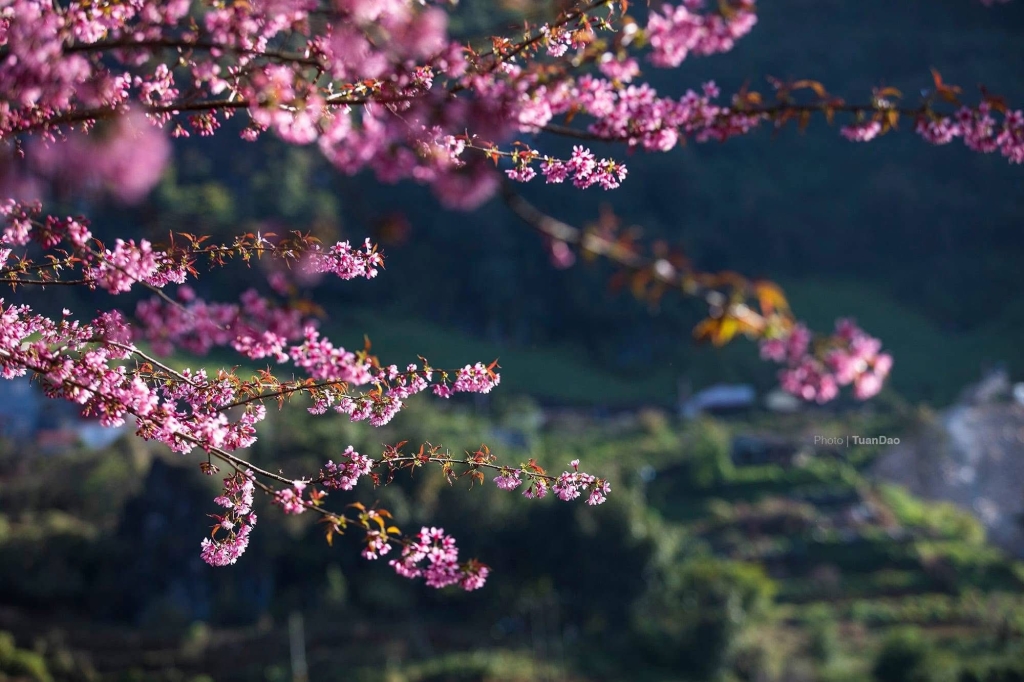
Sapa is one of Vietnam’s most iconic destinations, captivating travelers with its majestic mountains and lush forests. Beyond its breathtaking landscapes, Sapa is blessed with enchanting flower seasons—each more stunning than the last. Among them, the cherry blossom season is the one that truly steals hearts. As the flowers burst into bloom, shades of soft pink sweep across the sky, creating an irresistibly dreamy scene. This winter, make your way to Sapa and uncover the unique charm that’s unfolding here.
Cherry blossoms can only be found in a few places in Vietnam, and Sapa is one of those rare gems. To fully enjoy this magical spectacle, knowing the blooming period is essential.

In Sapa, cherry blossoms typically bloom from late winter to early spring, usually beginning from mid-November and lasting until January. The most vibrant and picturesque time is around mid-December, when the blossoms peak and remain dazzling for about 3 to 4 weeks. Interestingly, the blooming time varies depending on altitude and terrain, which is why cherry blossoms appear across Sapa throughout the winter months.
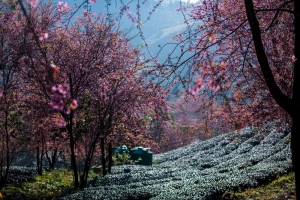
Right now, cherry blossoms are in full bloom across Sapa. It’s the perfect opportunity to combine your winter getaway with sightseeing and seasonal flower viewing. December in Sapa is a month rich in color, adventure, and unforgettable experiences.

Like all of Sapa’s signature flower seasons, the cherry blossoms transform the town into a vibrant, romantic wonderland. When the flowers bloom, Sapa resembles a miniature Japan nestled in the heart of the Northwest mountains.

You’ll find cherry blossoms lining the winding mountain roads and spreading across vast valleys. When in full bloom, they create a sea of radiant pink. The delicate petals glowing against the blue sky make Sapa feel magically alive.
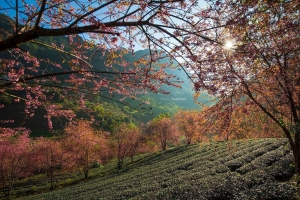
Winter in Sapa brings a special charm—mist drifting gently through the valleys, cherry blossoms peeking through the fog, creating scenes both mystical and romantic. And on sunny days, when morning dew glistens on the petals, the blossoms sparkle under the golden light. The entire sky seems brighter, filled with joy and freshness. For photography lovers, this is the perfect moment to capture Sapa at its most mesmerizing.

Among Sapa’s must-see places is the legendary O Quy Ho Pass—one of Vietnam’s “Four Great Mountain Passes.” Known for its epic mountain scenery and thrilling curves, the pass becomes even more enchanting during cherry blossom season.
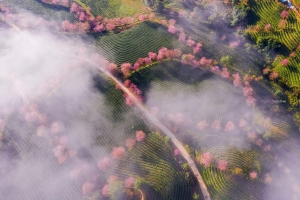
As you travel along the pass, cherry blossom trees appear here and there along the roadside. Experiencing the dramatic mountain route while being surrounded by soft pink blossoms is a delight for any traveler.

At the summit, the view is unforgettable: clouds drifting above, blossoms shimmering through the mist, creating a poetic, almost surreal scene. From this viewpoint, looking across the endless mountains dotted with blooming cherry trees feels like stepping into a beautiful painting.
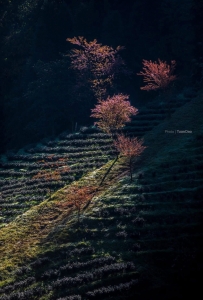
With cherry blossoms now at their peak, this winter is the perfect time to visit Sapa. If you’re still searching for travel plans, let the charm of this mountain town—painted in pink—be your inspiration. For detailed schedules and travel information, contact Luvitrans – Luxurytrain in Vietnam to plan your dreamy winter escape to Sapa.
Top 15 Must-Visit Destinations in Ninh Binh That Will Captivate You at First Sight

Top 15 Must-Visit Destinations in Ninh Binh That Will Captivate You at First Sight

Ninh Binh is well known for its stunning natural landscapes and impressive architectural works. Let’s explore the must-visit destinations in Ninh Binh with BestPrice!

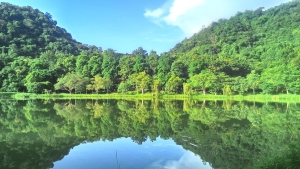
Cuc Phuong National Park

Cuc Phuong National Park is Vietnam’s first national park, located at the intersection of three regions: the Northwest, the Red River Delta, and the North Central Coast, across three provinces—Ninh Binh, Hoa Binh, and Thanh Hoa.

This national park plays a vital role in conserving rare and endangered species. Visiting Cuc Phuong, you can admire and learn about the rich biodiversity of a tropical rainforest ecosystem.

You can also enjoy eco-tourism activities, relaxation, camping, adventure tours, and cultural–historical research.

Entrance fees:

  • Adults: 60,000 VND
  • Students: 20,000 VND
  • Children: 10,000 VND

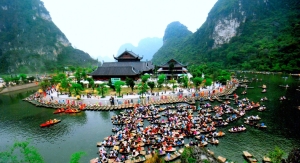
Trang An Eco-Tourism Complex

Located 7 km west of Ninh Binh city center, Trang An is one of the most famous destinations in the region.

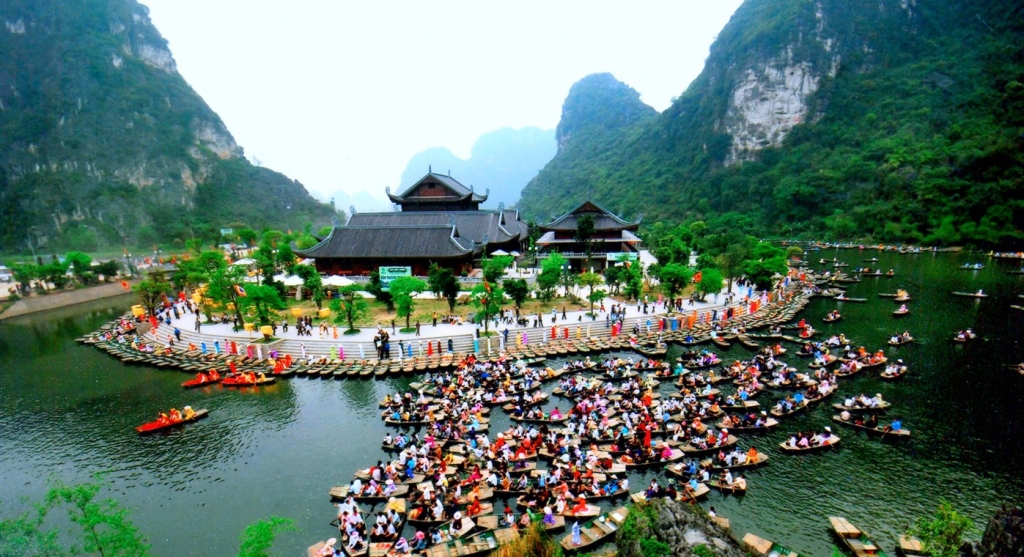
Trang An is part of the Trang An Landscape Complex—a UNESCO Mixed World Heritage Site—preserving diverse ecosystems including wetlands, limestone mountains, archaeological sites, and cultural–historical relics. In 2014, it was recognized as a special national heritage site and a UNESCO World Heritage Site.

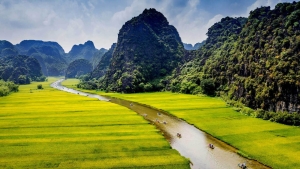
Often called the “Ha Long Bay on land,” Trang An captivates visitors with its limestone karst formations and majestic cave systems. Here, you can enjoy peaceful natural scenery and cultural–spiritual spaces.

Bai Dinh Pagoda

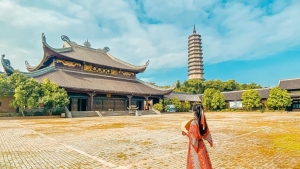
Bai Dinh Pagoda sits along National Highway 38B in Gia Sinh commune, Gia Vien district, around 15 km from Ninh Binh city. It is known for holding multiple national and Asian records.

The complex includes an ancient pagoda and a new pagoda area built in 2003. Besides being a sacred site, Bai Dinh impresses with its grand architecture and unique features such as the Stupa, the 100-meter Maitreya statue, the Bell Tower, the Avalokitesvara Shrine, and Phong Sinh Lake.

A truly unmissable spiritual destination.

Temples of King Dinh and King Le

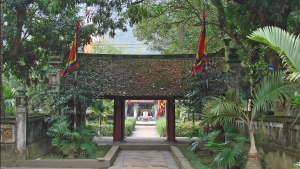
The Temple of King Dinh Tien Hoang is located in Truong Yen commune, within the protected area of the Hoa Lu Ancient Capital complex. Together with the King Le Temple, it is listed among the “Top 100 Notable 100-Year-Old Structures in Vietnam.”

Both temples are part of the Trang An World Heritage Complex, recognized by UNESCO in 2014.

The Temple of King Le Dai Hanh is dedicated to King Le Dai Hanh, Queen Duong Van Nga, Le Long Dinh, Princess Le Thi Phat Ngan, and General Pham Cu Luong. It is located about 300 meters from the King Dinh Temple.

Mua Cave (Hang Mua)

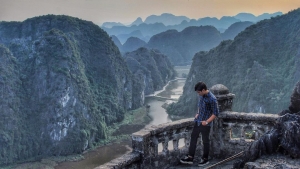
Hang Mua lies at the foot of Mua Mountain in Ninh Xuan commune, Hoa Lu district. The highlight here is the stone staircase of nearly 500 steps leading to the mountaintop, resembling the Great Wall of China.

From the summit, you can enjoy panoramic views of Tam Coc and Ninh Binh’s breathtaking landscape.

Legend has it that King Tran used to come here to watch court dancers perform, hence the name “Mua Cave” (Dance Cave).

Tam Coc – Bich Dong

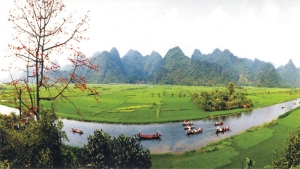
Tam Coc – Bich Dong, also known as “Ha Long Bay on land” or “The second most beautiful cave in Vietnam,” is a key national tourist area.

The site features limestone caves, historical relics of the Tran Dynasty’s Vu Lam Palace, and lies mainly in Ninh Hai commune. The Tam Coc – Trang An complex is a special national relic and a UNESCO World Heritage Site.

Entrance fee:

  • Adults: 120,000 VND
  • Children: 60,000 VND

Van Long Wetland Nature Reserve

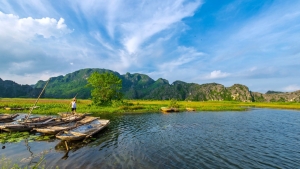
Van Long is the largest wetland natural reserve in the Red River Delta, located in Gia Vien district. It was designated a nature reserve in 1999.

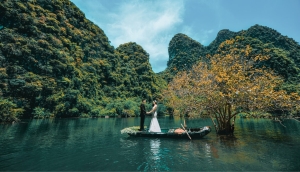
Often called the “bay without waves,” Van Long offers mirror-like water surfaces reflecting limestone mountains such as Meo Cao, Mam Xoi, Hom Sach, Da Ban, Nghien, Mo Coi, and Co Tien.

Entrance fee: 20,000 VND/person

Phat Diem Stone Cathedral

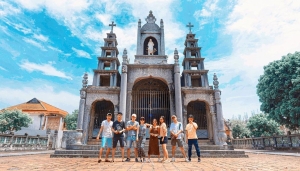
Phat Diem Cathedral is a 22-hectare Catholic complex in Phat Diem town, Kim Son district. Built entirely of stone and wood between 1875–1898, it is unique for combining traditional Vietnamese temple architecture with Catholic designs.

The project was led by Father Peter Tran Luc (also known as “Cu Sau”) and local parishioners over more than 30 years.

Thach Bich – Thung Nang

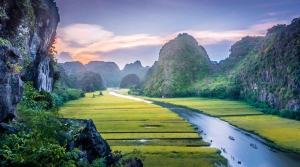
Thung Nang (Sunny Valley) showcases golden rice fields and emerald rivers. Located in Dam Khe village, Ninh Hai commune, it is known for its tranquil beauty illuminated by sunlight across trees, cottages, and clear waters.

Thung Nang consists of an outer and inner area connected by cave systems with low ceilings and various stalactite formations.

Kenh Ga – Van Trinh Tourism Area

This major tourist area links two attractions: the Kenh Ga Hot Spring and Van Trinh Cave. Located between Gia Vien and Nho Quan districts, it offers river–mountain–lake landscapes ideal for eco-tourism.

Dong Chuong Lake

Dong Chuong Lake lies between Phu Loc and Phu Long communes. Its peaceful scenery features pine forests reflecting over calm water, creating a serene and poetic atmosphere. The area includes Ba Tua Waterfall, Chín Suối Stream, pine hills, and the unique “Sky Pond.”

Since 2008, tourism facilities such as boat docks, playgrounds, stilt-house resorts, sports areas, and campsites have been developed here.

Yen Quang Lake

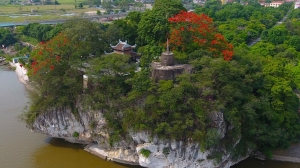
Yen Quang consists of four lakes separated by irrigation dams. It belongs partly to the buffer zone of Cuc Phuong National Park, featuring a small island with a shrine and calm waters home to many water birds. The scenery is quiet and pristine, making it a peaceful fishing and sightseeing spot.


Non Nuoc Mountain

Non Nuoc Mountain (also known as Duc Thuy Son) stands at the junction of the Van and Day rivers. Climbing its 72 stone steps to the flat, shaded summit offers a pleasant rest area.

At its foot lies Non Nuoc Pagoda, dating back to the reign of King Ly Nhan Tong. Restored in 2006, it still retains its sacred, ancient atmosphere.

Thien Ha Cave

Located on Tuong Mountain at 200 meters high, Thien Ha Cave formed part of the natural western defensive wall of the 10th-century Hoa Lu capital. From the Muong village of Tho Ha, visitors take a small boat through rice fields before exploring stone formations resembling animals and mythical figures.

Ninh Binh Museum

Located south of Thuy Son Cultural Park, Ninh Binh Museum is shaped like a lotus rising amid mountains and rivers. It showcases artifacts on natural history, wildlife, and Ninh Binh’s historical heritage, along with exhibits on its most famous landscapes.


LUVITRANS – LUXURY TRAIN IN VIETNAM

Luvitrans – A New Journey Inspired by the Passion to Elevate Vietnam’s Railway Experience
Luvitrans marks a remarkable transformation in Vietnam’s railway services, built on the expertise of specialists with over 20 years of experience in domestic and international passenger transportation. Founded by industry veterans, Luvitrans represents not only professionalism but also a strong desire to elevate the quality of railway services, bringing Vietnamese train travel closer to international standards. Constantly innovating and improving, Luvitrans proudly accompanies the growth of Vietnam’s tourism and transportation sectors in this new era.

Luvitrans – A Premium Train Experience for Journeys Filled with Vietnamese Charm
If you are seeking a mode of travel that is safe, comfortable, relaxing, and stylish, Luvitrans high-quality trains are the perfect choice for your next adventure.

Unlike the familiar image of traditional trains, Luvitrans Express stands out with its professional service—from booking your ticket to every onboard amenity along the way. Operating VIP carriages attached to trains run by the Vietnam Railways Corporation, Luvitrans upgrades and manages these coaches to premium standards, offering an elevated and distinctly refined travel experience.

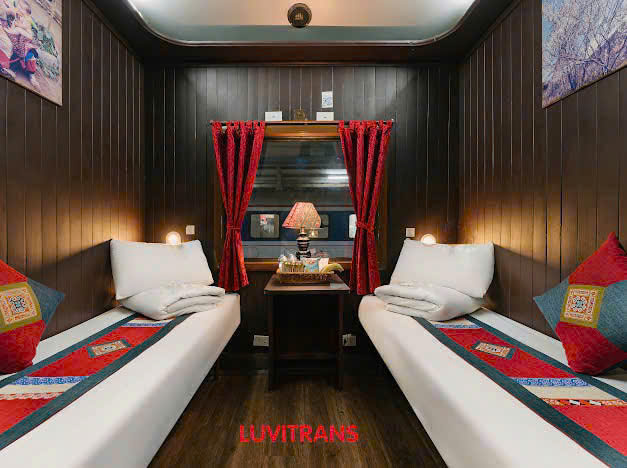
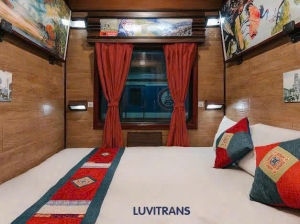
  • 2-berth and 4-berth sleeper cabins featuring high-quality wooden interiors, ensuring privacy and tranquility—ideal for both tourists and business travelers

  • Spotless facilities – Safety – Punctuality

  • Suitable for various types of travelers: international guests seeking a cozy and private overnight train journey; families with young children who need a safe and comfortable space; couples looking for a romantic and peaceful getaway; or business travelers who want to relax between tight schedules.

Luvitrans is more than transportation—it is a journey of memorable experiences.
Take a moment to “slow down” with Luvitrans, and immerse yourself in the serenity, comfort, and authentic beauty of Vietnam as it gently unfolds beyond your train window.

Fansipan – The Unyielding Dream of Conquering the Sky’s Summit

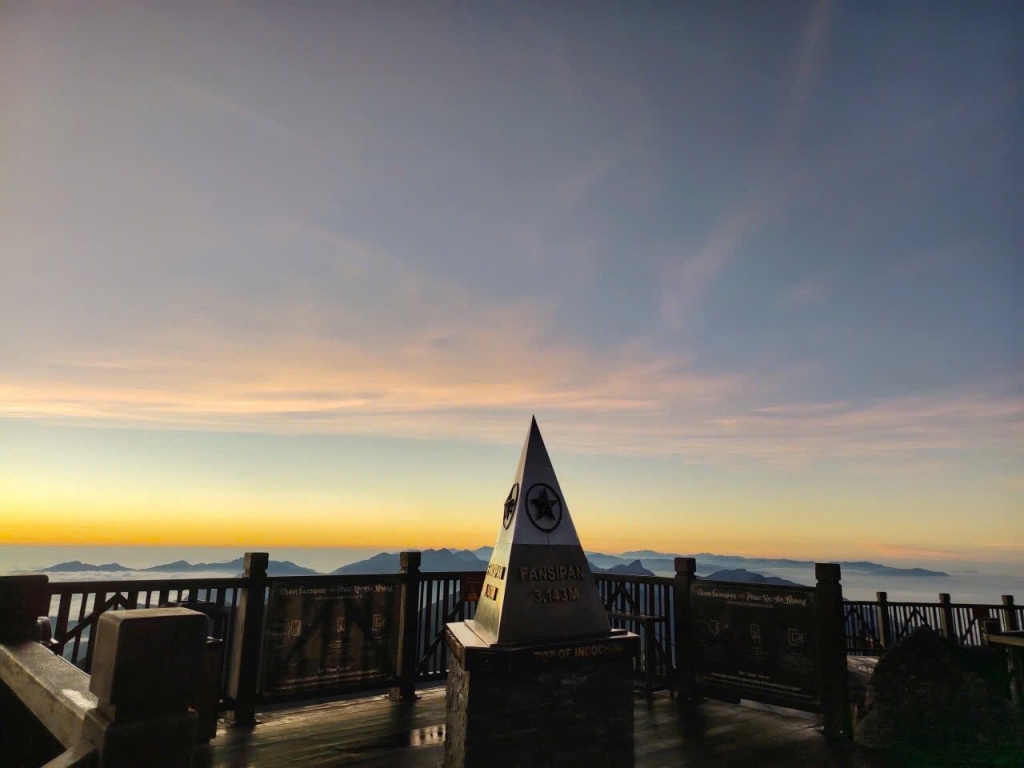
Fansipan, known locally as Hua Xi Pan—which means “a precariously towering giant rock”—stands at 3,143 meters. It is the highest mountain among the three Indochinese countries and is also one of the most topographically complex mountain ranges in the region.

Fansipan rises gently into the Northwestern sky, like a strand of drifting cloud that has taken the shape of a mountain—majestic yet tender. The path leading to its summit guides travelers through the mist-covered Hoang Lien forest, where each step seems to dissolve into a quiet, serene space. The leaves tremble softly in the breeze, carrying the faint fragrance of wildflowers—just enough to make one’s heart grow gentle, as if brushing against an old, forgotten memory.

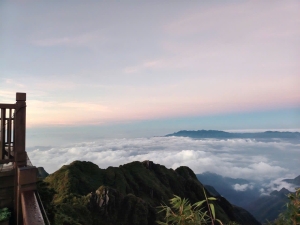
The clouds on Fansipan do not merely drift; they seem to embrace every slope, lingering around the rocks like soft, white ribbons. Reaching the summit, the world opens up vast and dreamlike. Beneath your feet, a sea of clouds shimmers in the early sunlight, each ripple glowing like endless fields of cotton. Far away, the mountain ranges fade into pale blue, blending with the sky in the most delicate stroke of nature.

Standing at that highest point, the soul suddenly feels clearer. All burdens seem to melt into the mist, leaving only a quiet peace—light as the whisper of wind between the heavens. Fansipan is not just beautiful; it holds a gentle charm of its own—one that lingers in the heart, leaving behind a soft longing, a dreamy trace that is hard to forget.

Contact us Ms. Quế
Contact us Ms. Yến